In Japan the daily cleaning of schools by students is not a punishment or a budget measure. It is a deliberate educational practice called osoji, built into the school day across primary and secondary education. Students clean their own classrooms, corridors, toilets, and school grounds. The practice is rooted in values around respect for shared spaces and collective responsibility. A student who maintains a space develops a different relationship with it than one who simply uses it.
Daniel and Mom explore what osoji involves, why it exists, what it is designed to produce, and how it connects to broader ideas about education and shared responsibility. The episode treats the practice with genuine curiosity and respect, examining what it might teach beyond cleaning itself.
MomDaniel, what would you think if I told you that in Japan, students clean their own school every day? Classrooms, hallways, toilets, all of it.
DanielMom, that sounds like a punishment.
MomThat is almost exactly what most people outside Japan think. And it is almost exactly wrong.
DanielWrong? Hmm, then what is it?
MomPart of the curriculum. It is built into the way Japanese schools operate, not treated as an optional extra, but as an established part of school life.
DanielSo it is not a chore, it is actually a class?
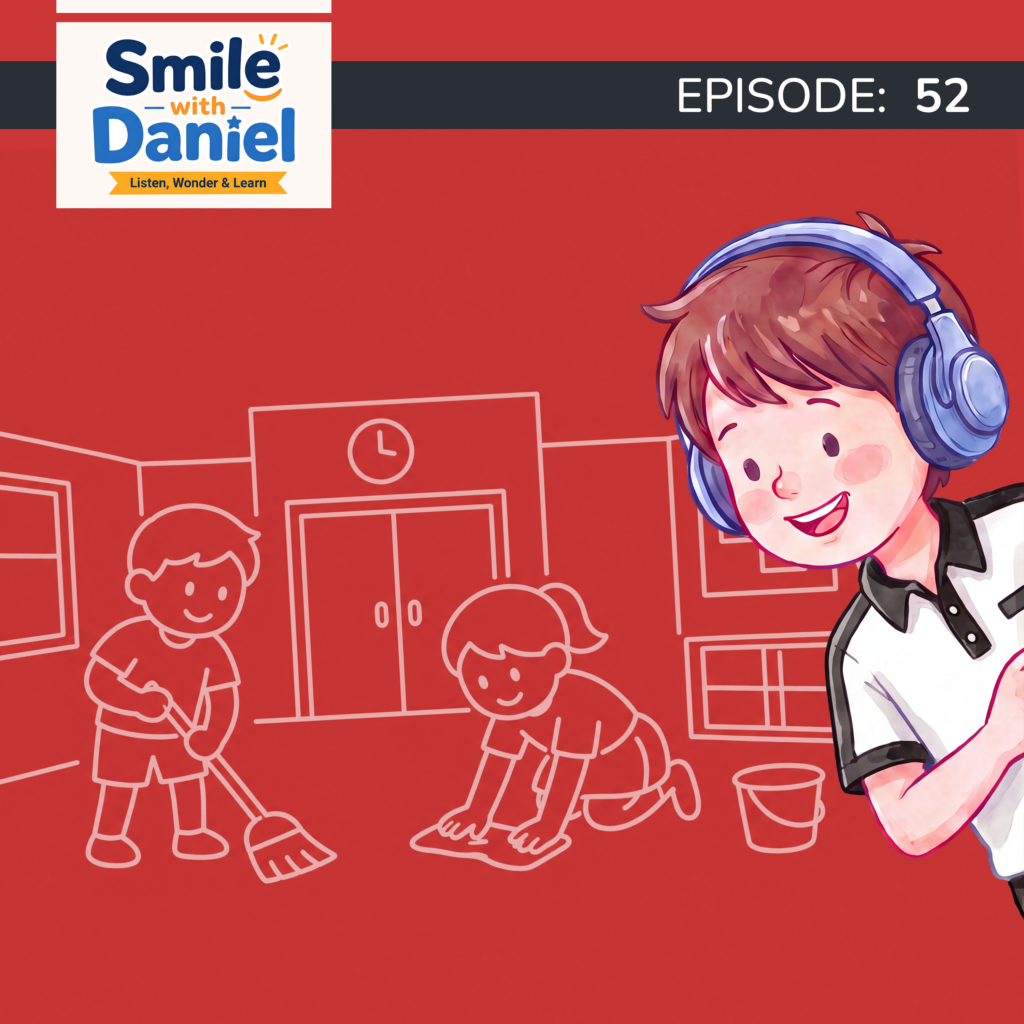
MomYes, it is called osoji. At a scheduled time each day, the whole school stops. In many schools, a short piece of music plays over the speakers to signal cleaning time. Every student, from first grade to high school, starts cleaning. Their own classroom, the hallway outside it, and two other assigned areas, like the library or the nurse's office.
DanielAnd what about the teachers?
MomThe teachers also clean alongside them. There is no hierarchy in the cleaning. A teacher might be scrubbing a toilet next to a first grader. The point is that everyone shares in the care of the space everyone shares.
DanielThat is actually kind of powerful.
MomAnd the reasoning behind it goes back a long way. For centuries, Zen Buddhist temples have treated cleaning as a form of practice. Sweeping and scrubbing were not considered distractions from learning or meditation. They were part of them. Keeping the space was keeping the mind.
DanielSo cleaning was considered part of the practice itself, not a distraction from it.
MomThe idea being that you cannot be present in your mind if you are not present in your body and your surroundings. Cleaning the space and clearing the mind are connected. As Japan's modern education system developed, that philosophy became woven into everyday school life.
MomThe cleaning was not an afterthought. It was part of the philosophy.
DanielSo when a Japanese kid cleans the bathroom at school, they are not being punished. They are being taught something.
MomSeveral things at once. Respect for shared spaces. Responsibility for the mess you make. Teamwork. Students work in small groups, each assigned to different areas. And something harder to translate. The idea that no task is beneath you. A student who cleans the toilet learns that cleaning the toilet is not lesser work.
DanielBecause if everyone does it, no one is above it.
MomExactly! And here is something practical that comes out of it. Students who clean their own spaces tend to be much more careful about how they treat them. If you know you will have to sweep it tomorrow, you think twice before dropping something today.
DanielSo it is also just very practical.
MomDeeply practical. The Japanese phrase, gakko soji, simply means school cleaning. But it represents much more than hygiene. It is part of an educational philosophy. One that treats how you care for shared spaces as part of how you learn to be a member of a community.
DanielDo other countries do this?
MomSome do. And actually, this has spread. Japan has an educational package called tokatsu that includes things like cleaning time, lunch serving, and group activities. In 2016, Egypt began introducing it into its schools. And by 2026, more than 18,000 Egyptian public schools had adopted elements of it.
MomThe schools that used it became some of the most sought after in the country.
DanielEgypt adopted the Japanese school cleaning system?
MomAnd educators reported students taking more pride in their schools, better behavior in shared spaces, a shift in how young people related to their environment. The idea that cleaning teaches something turned out to travel well.
DanielSo it is not really about cleaning at all. It is about what cleaning teaches. That shared spaces belong to everyone who uses them, and everyone who uses them has a responsibility to care for them.
MomThat is exactly what Japanese educators would say. And they would add, you learn it better by doing it every day than by being told it once. So, Daniel, what is one thing you are taking with you today?
DanielOkay, let's see. In Japan, students clean their own school every day, classrooms, hallways, toilets, as an established part of school life. Let's not forget that teachers clean alongside them. It comes from a Zen idea that physical work and looking after your surroundings is connected to how you think and who you become.
DanielNot a punishment, but a lesson.
MomYou know, respect is not just something you say. It is something you do.
DanielI am going to think about that the next time I leave a mess for someone else to clean up.
MomGood. That is exactly what they are hoping for.