
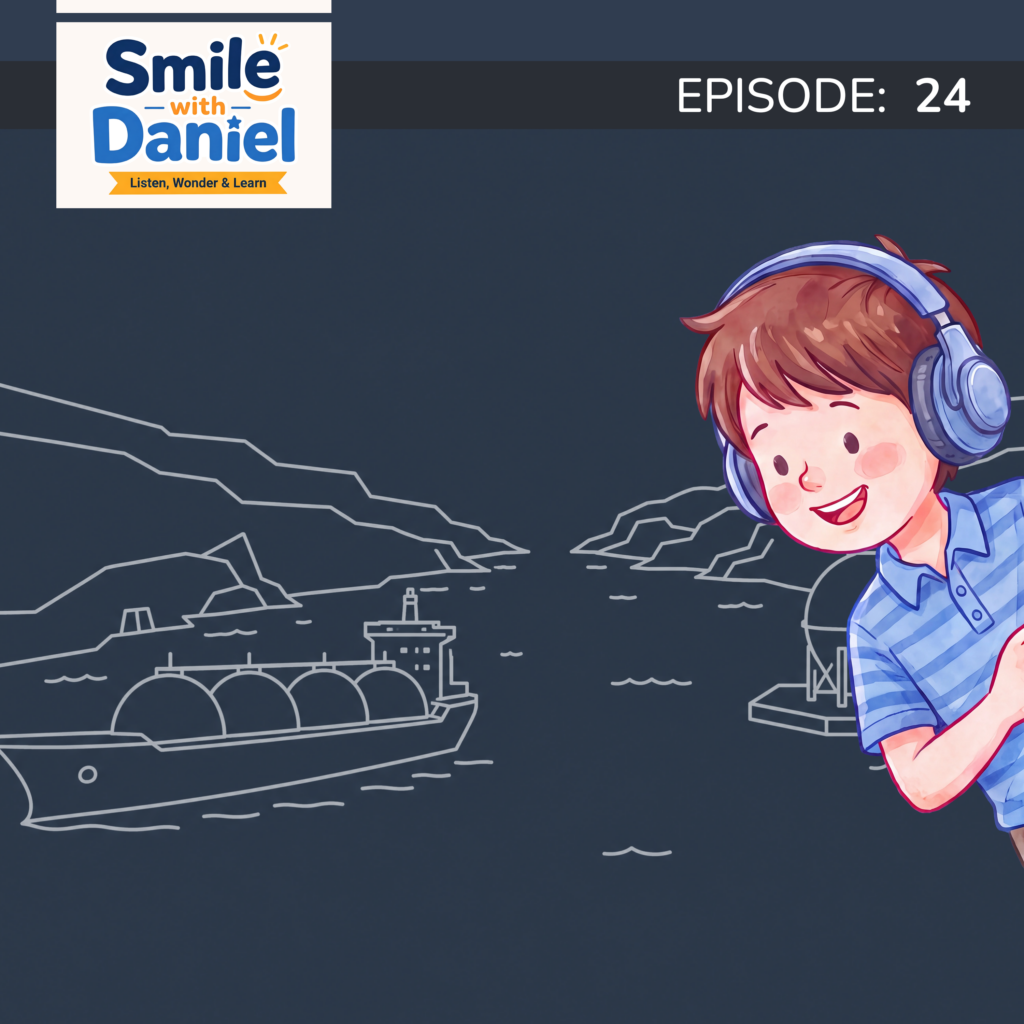

The Strait of Hormuz is a narrow waterway between Iran and Oman connecting the Persian Gulf to the Gulf of Oman and the broader ocean. At its narrowest it is roughly 21 miles wide. Through that gap passes approximately a fifth of the world’s traded oil. It is one of the most strategically significant pieces of geography on the planet because any disruption to shipping through the strait affects global oil prices and by extension the price of almost everything else. Geographers and strategists call it a chokepoint, a place where geography concentrates power.
Daniel and Mom examine what the strait is, where it sits, why so much oil passes through it, what would happen if it were disrupted, and what the concept of a geographic chokepoint means for understanding how the world works.

Daniel is nine. He asks the questions, refuses to accept easy answers, and picks every episode topic himself.

Mom does the digging - finding the sources, checking the claims, and translating them into something a nine-year-old will actually sit still for.

The Strait of Hormuz is roughly 21 miles wide at its narrowest and connects the Persian Gulf to open ocean.
About a fifth of the world's traded oil passes through the strait, making it a critical global chokepoint.
ny disruption to the strait affects global oil prices and by extension the cost of nearly everything else.
Geography concentrates power at chokepoints, making small pieces of land or water enormously significant.
“Most of the things that shape the world are smaller than you'd expect.”