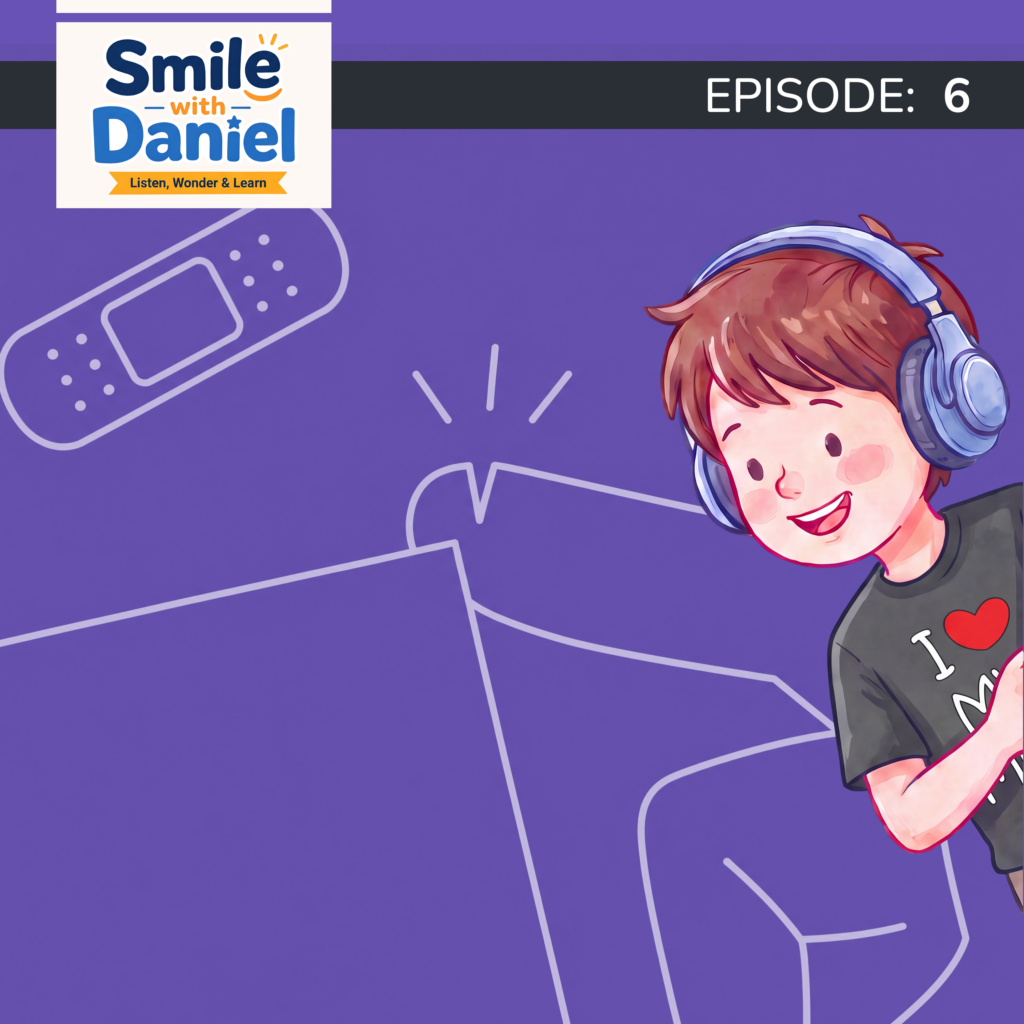

Paper cuts hurt disproportionately for several reasons working together. Fingertips contain a higher density of pain receptors than almost any other part of the body, because fine touch sensitivity requires them. Paper tears rather than cuts cleanly, leaving a jagged wound edge that irritates more tissue. The cut is shallow enough that it does not bleed significantly, so it is not flushed clean by blood and does not clot quickly. And because hands are in constant use, the wound reopens repeatedly throughout the day, preventing the early stages of healing that reduce pain.
Daniel and Mom examine why fingertips are so sensitive, how paper’s tearing motion differs from a clean cut, and why the combination of factors makes such a small injury so persistently painful.

Daniel is nine. He asks the questions, refuses to accept easy answers, and picks every episode topic himself.

Mom does the digging - finding the sources, checking the claims, and translating them into something a nine-year-old will actually sit still for.
Fingertips have a very high density of pain receptors because fine touch sensitivity requires them.
Paper tears rather than cutting cleanly, leaving a jagged edge that irritates more surrounding tissue.
The shallow cut bleeds little and does not flush clean, slowing initial healing.
Constant hand use reopens the wound repeatedly, preventing the early healing that reduces pain sensation.
“Tiny cut. Maximum chaos.”