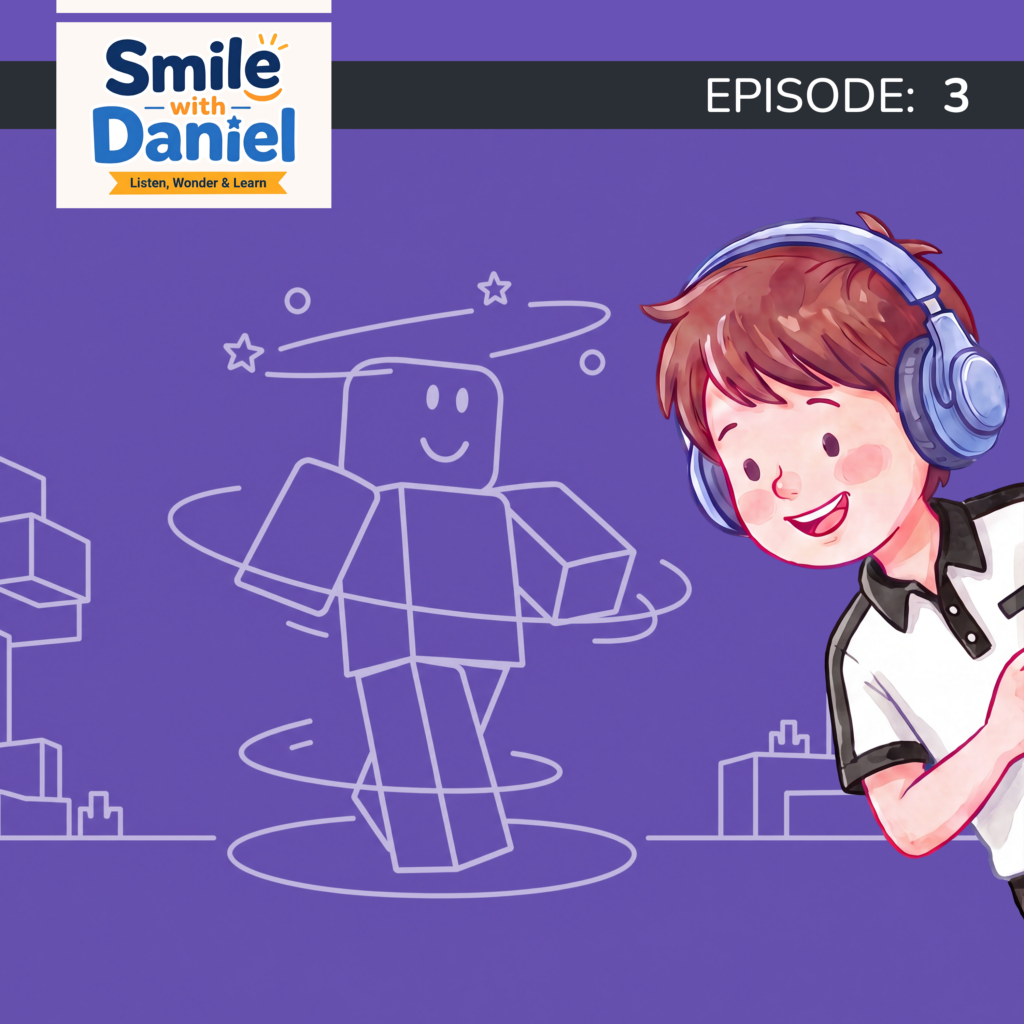

Dizziness from spinning is caused by the vestibular system in the inner ear. Tiny canals filled with fluid detect rotational movement by sensing the fluid shifting. When you spin and stop suddenly, the fluid continues moving by inertia after your body has stopped. The vestibular system tells the brain you are still spinning. The visual system, looking at a stationary room, tells the brain you have stopped. The brain receives two conflicting signals simultaneously and cannot resolve them, producing the sensation of dizziness. The mismatch also explains why closing your eyes can reduce dizziness: it removes the contradicting visual signal.
Daniel and Mom trace the inner ear anatomy, the fluid mechanics, the signal conflict in the brain, and why Daniel immediately wants to go outside and test this for science.

Daniel is nine. He asks the questions, refuses to accept easy answers, and picks every episode topic himself.

Mom does the digging - finding the sources, checking the claims, and translating them into something a nine-year-old will actually sit still for.
Dizziness happens because inner ear fluid continues moving by inertia after you stop spinning.
The vestibular system sends a still-spinning signal while eyes send a stopped signal. The brain cannot resolve them.
Closing your eyes after spinning can reduce dizziness by removing the contradicting visual signal.
The inner ear uses fluid-filled canals to detect rotational motion in multiple directions.
“My liquid is dizzy. Not me.”