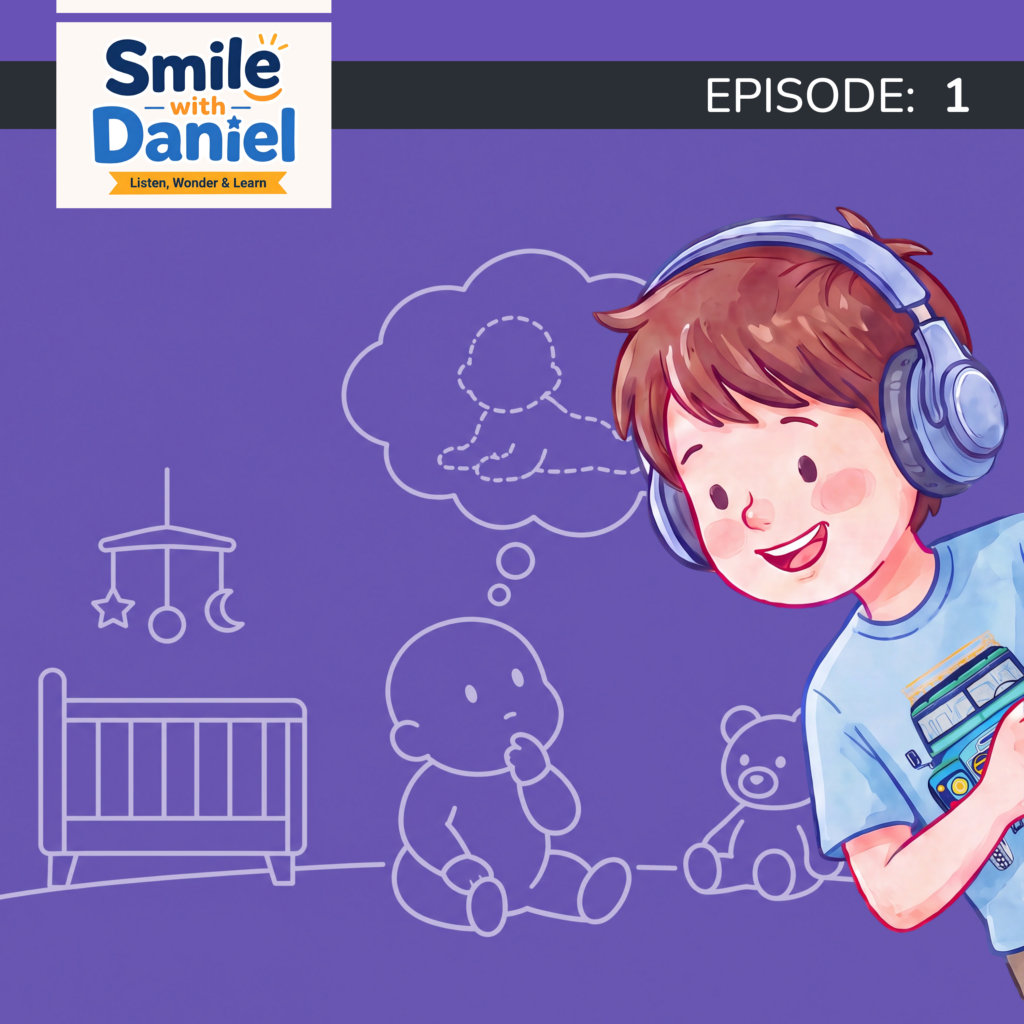

Infantile or childhood amnesia describes the near-universal inability to recall events from the first two to three years of life. The primary explanation involves the hippocampus, the brain structure central to forming long-term episodic memories, which is still developing during early childhood. A second factor involves language: memories are partly organized and stored through the narrative structures that language provides, and young children lack those structures. A third factor is the speed of early brain development: new neurons being generated rapidly may displace or interfere with early memory storage. Memories from early childhood may exist in some form but become inaccessible rather than simply absent.
Daniel and Mom examine each of the major explanations, why the memories may exist but be inaccessible rather than simply not formed, and what it means that the moment language arrived, the brain started keeping better records.

Daniel is nine. He asks the questions, refuses to accept easy answers, and picks every episode topic himself.

Mom does the digging - finding the sources, checking the claims, and translating them into something a nine-year-old will actually sit still for.
Childhood amnesia affects almost everyone. We cannot recall the first two to three years of life.
The hippocampus, central to long-term memory, is still developing during early childhood.
Language helps organize and store memories. Before language develops, those structures are not available.
Early memories may exist in some form but become inaccessible rather than simply absent.
“The moment you started talking, your brain started keeping receipts.”