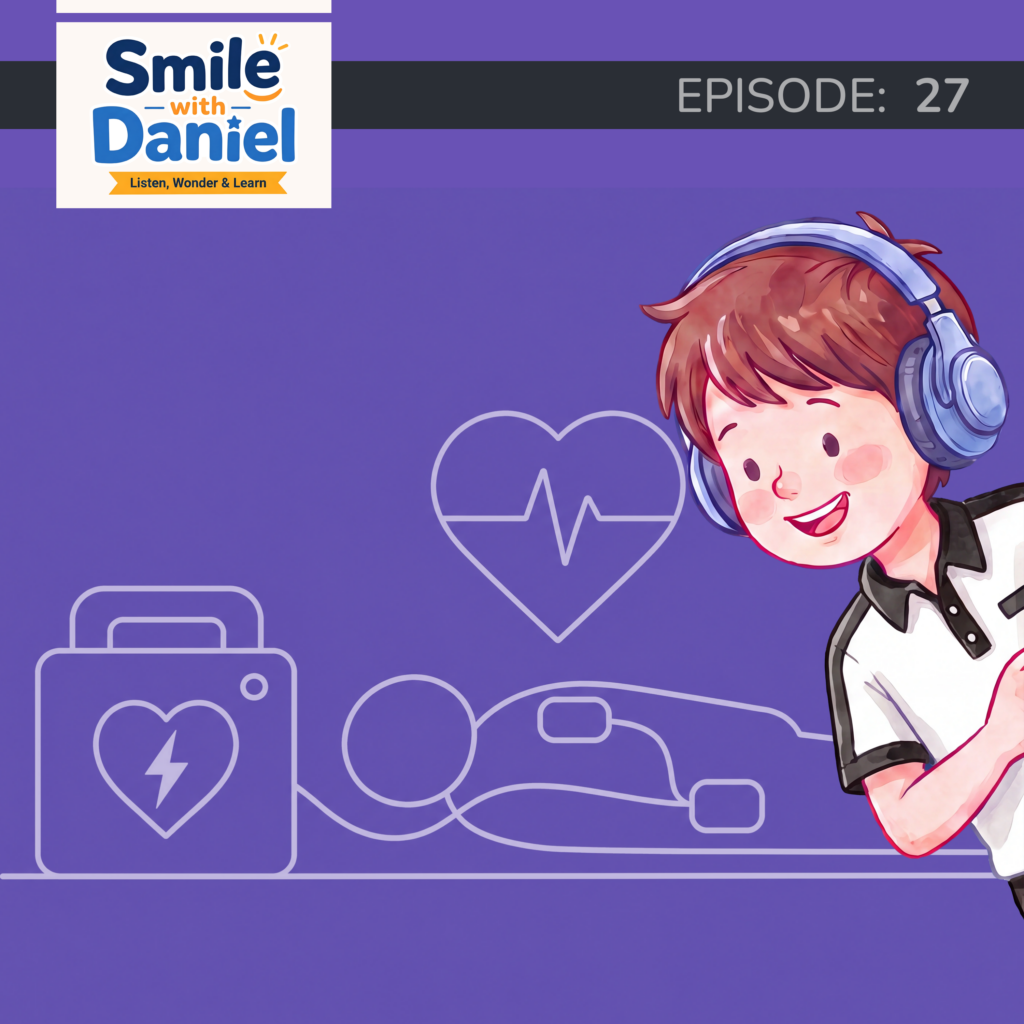

An automated external defibrillator, or AED, is a device designed to be used by anyone in an emergency. When someone experiences sudden cardiac arrest, every minute without intervention reduces the chance of survival significantly. An AED analyzes the heart’s rhythm, determines whether a shock is needed, and delivers one if appropriate. It gives voice instructions throughout. The device makes the decision. The bystander follows the instructions and calls for help.
Daniel and Mom go through what an AED is, what cardiac arrest is and how it differs from a heart attack, what the device actually does to the heart, and what a bystander should do when they see one. The episode is handled with care for a young audience and closes on the most important instruction in the episode: open the box and listen to the voice.

Daniel is nine. He asks the questions, refuses to accept easy answers, and picks every episode topic himself.

Mom does the digging - finding the sources, checking the claims, and translating them into something a nine-year-old will actually sit still for.

An AED analyzes heart rhythm and delivers a shock if needed. It makes the medical decision, not the user.
Every minute of delay in treating sudden cardiac arrest significantly reduces survival chances.
AEDs give voice instructions throughout. You do not need medical training to use one.
The steps are: call emergency services, start CPR if you know how, find the AED, open the box, and listen.
“Open the box. Listen to the voice.”