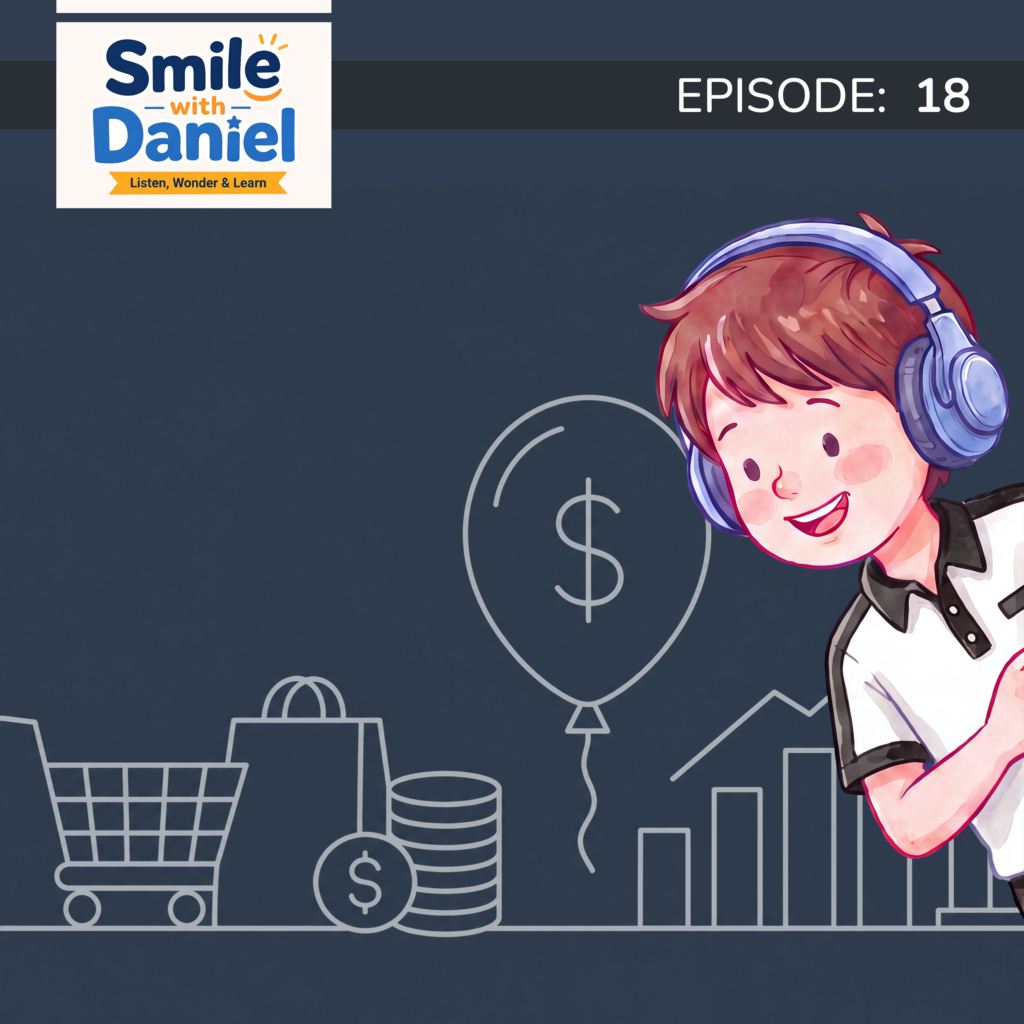

Inflation is a measure of how prices change across an economy over time. When more money chases the same amount of goods, prices rise. When the economy produces more goods than money is chasing, prices fall. Central banks aim to keep inflation at around two percent annually, low enough to be manageable but high enough to encourage spending rather than hoarding. Too much inflation erodes purchasing power. Too little, or deflation, can cause people to delay spending and slow economic activity. The balance between them is what monetary policy is largely trying to manage.
Daniel and Mom examine what inflation actually measures, why some inflation is considered desirable, what causes it to rise or fall, and what the phrase means when it appears in news coverage. The episode closes on Daniel’s summary that earns Mom’s best line.

Daniel is nine. He asks the questions, refuses to accept easy answers, and picks every episode topic himself.

Mom does the digging - finding the sources, checking the claims, and translating them into something a nine-year-old will actually sit still for.
Inflation measures how prices change across an economy when money supply and goods supply go out of balance.
Too much inflation erodes purchasing power. Too little can slow economic activity by discouraging spending.
Central banks typically aim for around two percent annual inflation as a sustainable target.
Inflation affects almost everything, not just visible prices like groceries and fuel.
“Money and stuff. Economists have said it in far more complicated ways and meant exactly the same thing.”