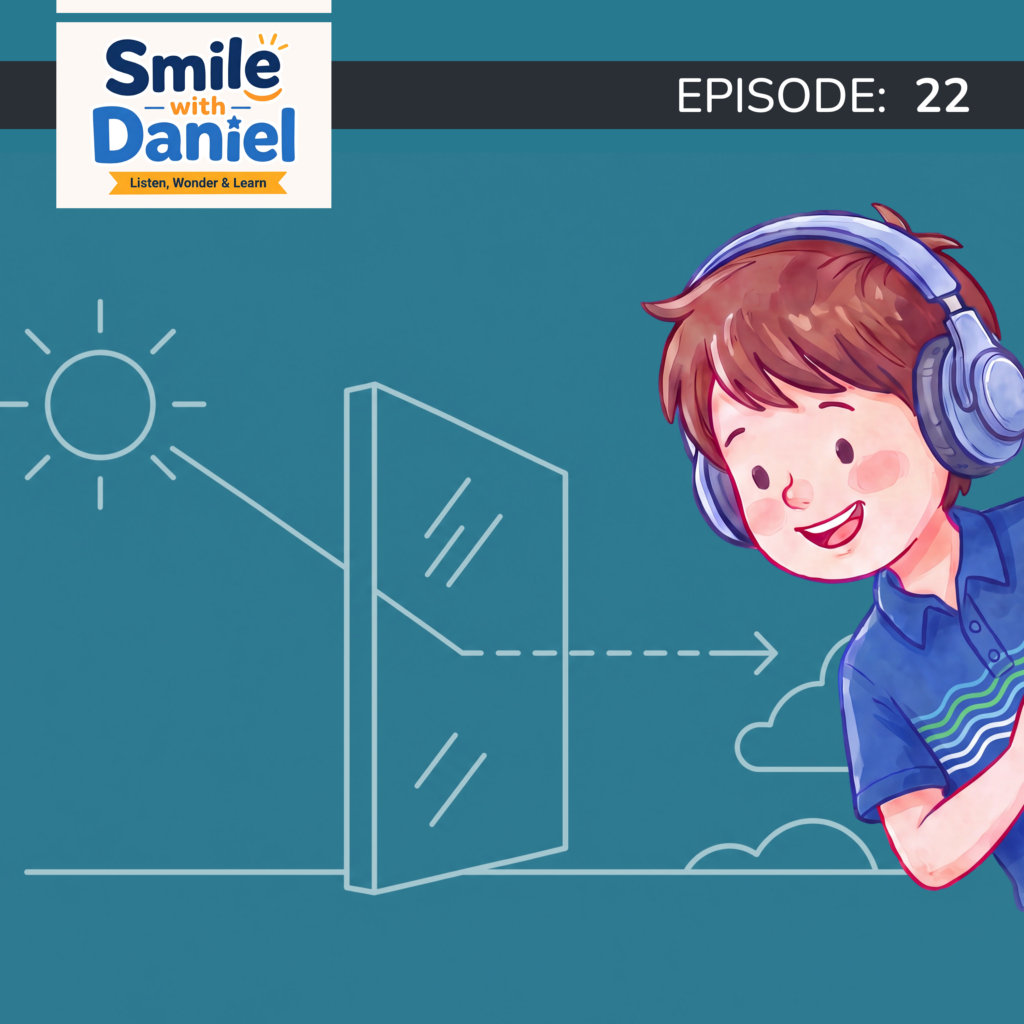

Glass is transparent because of how its electrons interact with light. When light hits a material, its photons can be absorbed by electrons if they carry the right amount of energy to push an electron to a higher energy level. In most materials, visible light photons have the right energy for this, so they are absorbed and the material appears opaque. In glass, the energy gap electrons need to jump is larger than what visible light photons can provide, so those photons pass straight through. Ultraviolet light carries more energy, which is why glass blocks UV while transmitting visible light.
Daniel and Mom work through what light actually is, how electrons absorb photons at specific energy levels, why glass electrons are not the right fit for visible light, and why the same glass that lets you see outside blocks the wavelengths that cause sunburn.

Daniel is nine. He asks the questions, refuses to accept easy answers, and picks every episode topic himself.

Mom does the digging - finding the sources, checking the claims, and translating them into something a nine-year-old will actually sit still for.
Glass is transparent because its electrons require more energy than visible light photons can provide to be absorbed.
When photons cannot be absorbed, they pass straight through the material rather than being captured.
Ultraviolet light carries more energy than visible light, which is why glass can block UV while transmitting visible light.
Opacity in most materials comes from electrons absorbing visible light photons at the right energy level.
“Next time someone asks me why glass is clear I'm going to say the electrons aren't hungry enough.”