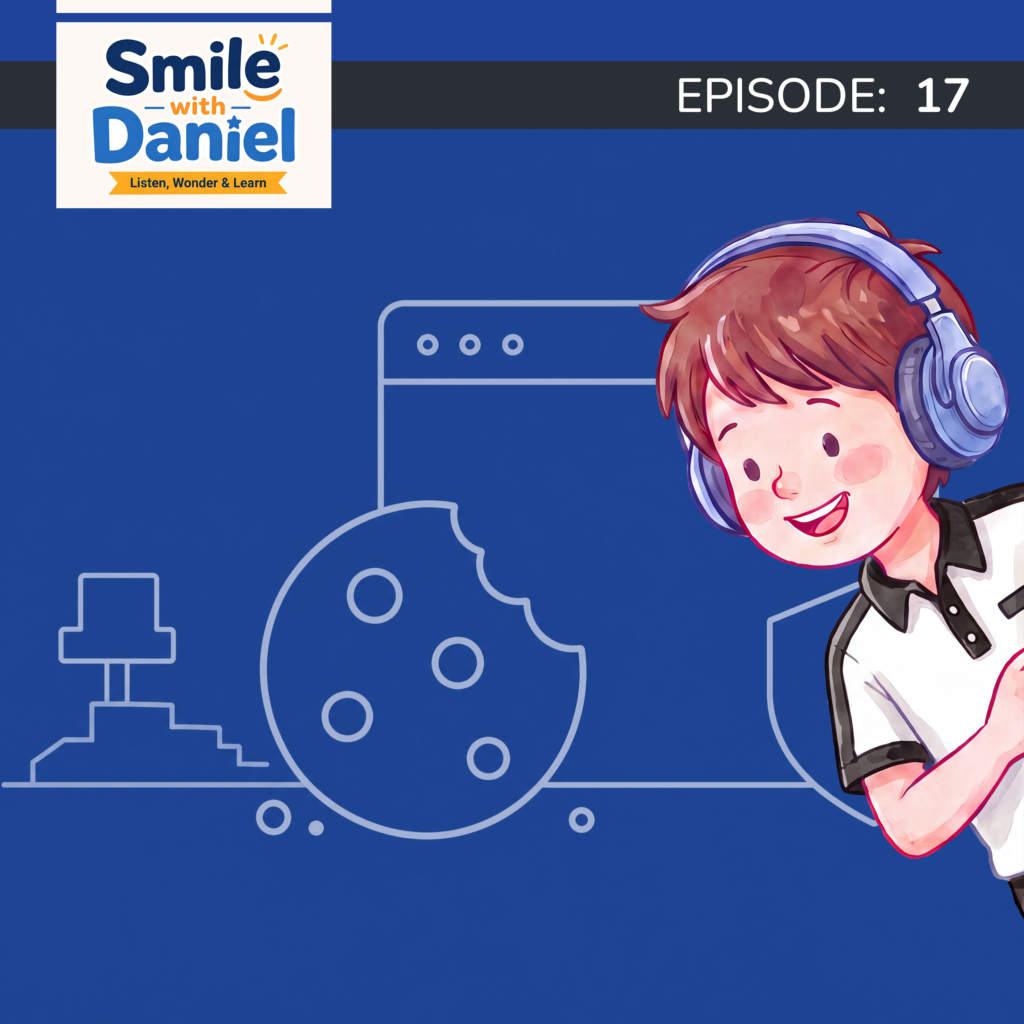

Browser cookies are small text files that websites store on a user’s device to remember information between visits. First-party cookies, set by the website you are visiting, remember login details, shopping cart contents, and preferences. Third-party cookies are set by other companies and can track browsing behavior across multiple websites, building profiles used for targeted advertising. The cookie consent popups that appear on websites across the European Union and elsewhere exist because laws require websites to ask permission before using non-essential cookies.
Daniel and Mom examine what cookies actually are, how first-party and third-party cookies work differently, why the consent popups exist, and what a user can actually do about tracking. The episode closes on the detail that the technology almost had a much better name.

Daniel is nine. He asks the questions, refuses to accept easy answers, and picks every episode topic himself.

Mom does the digging - finding the sources, checking the claims, and translating them into something a nine-year-old will actually sit still for.
Browser cookies are small files that websites store on your device to remember information between visits.
First-party cookies are set by the site you are on. Third-party cookies are set by other companies to track you.
Third-party cookies can follow you across multiple websites, building profiles for targeted advertising.
Cookie consent popups exist because laws in places like the EU require permission before using non-essential cookies.
“Magic cookies. I can't believe that was almost the name."”